


Blog
How to Start a Successful Granola Business from Home or a Small Kitchen

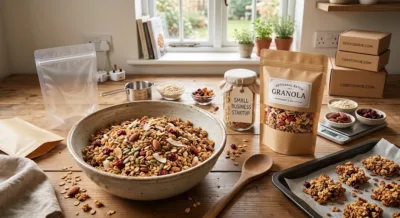
Granola is one of the most versatile, profitable, and shelf-stable products you can launch from a home or small business kitchen. With low initial equipment costs, high consumer demand for artisanal breakfast items, and long shelf life, starting a small-batch granola brand allows you to turn a simple recipe into a thriving food business in the UK.
1. Popular Granola Types & Market Positioning
Before firing up the oven, define your niche. Standing out requires offering distinct flavour profiles or catering to specialised dietary needs.
-
Classic Oat & Honey/Maple: Traditional rolled oats bound with natural sweeteners, vanilla, and light spice.
-
Dietary-Specific Granolas:
-
Gluten-Free: Prepared using certified gluten-free oats in a strictly cross-contamination-free environment.
-
Keto / Low-Carb / Grain-Free: Made with a base of nuts (almonds, pecans), seeds (pumpkin, chia, flax), and sugar-free binders like erythritol or monk fruit.
-
Vegan & Plant-Based: Sweetened with maple syrup, agave, or coconut nectar instead of honey.
-
-
Gourmet & Exotic Flavours:
-
Chai-spiced with cardamoms and dried ginger.
-
Dark chocolate, sea salt, and toasted coconut flakes.
-
Savoury granola featuring rosemary, olive oil, and pepitas for salads and soups.
-
2. Kitchen Setup & Baking Techniques
Granola does not require a full commercial setup to start, but scaling up requires consistent kitchen organisation.
Equipment Needed
-
Oven: A standard home oven (or a commercial convection oven for faster turnarounds).
-
Baking Trays & Baking Paper: Large rimmed baking trays lined with baking paper or silicone mats for even baking and easy cleanup.
-
Mixing Bowls: Extra-large stainless steel bowls for coating oats evenly without crushing them.
-
Digital Kitchen Scales: Measuring ingredients by weight ensures consistent flavour, batch after batch.
Best Baking Practices
-
Low & Slow Baking: Bake at low temperatures—typically between 150°C to 160°C (300°F–325°F). This dries out the oats while toasting them evenly without burning delicate nuts.
-
The “Cluster” Secret: If you want chunky clusters, press the wet granola mixture firmly onto the tray before baking. Avoid stirring too frequently.
-
The Cool-Down Phase: Granola finishes crisping up after it leaves the oven. Allow the granola to cool completely on the baking tray before breaking it into pieces or packaging. Packaging warm granola traps steam, resulting in a soggy product and a drastically reduced shelf life.
3. Hygiene & UK Food Safety Considerations
Producing food for the public carries essential legal responsibilities. Operating legally protects both your customers and your business reputation.
-
Local Authority Registration & Hygiene Certificates:
-
You must register your home kitchen with your local council’s Environmental Health department at least 28 days before trading.
-
Obtain a recognised Level 2 Food Hygiene Certificate for Catering. Having formal food safety training demonstrates professionalism and compliance during your inspection.
-
-
Cross-Contamination & Allergen Management:
-
Tree nuts, peanuts, sesame seeds, and cereals containing gluten are among the 14 major allergens recognised in the UK. Keep ingredient storage separate and clean equipment thoroughly between batches.
-
If claiming a product is “Gluten-Free”, ensure all raw materials are certified gluten-free and prepared in a clean environment to avoid cross-contact.
-
-
HACCP & Hygiene Standards:
-
Implement Safer Food, Better Business (SFBB) or HACCP-based procedures.
-
Practice strict handwashing protocols and use dedicated utensils and prep spaces for business production.
-
Keep detailed batch records including dates, lot numbers, and ingredient supplier details for full traceability.
-
4. Packaging & UK Compliant Labelling
Packaging serves a double purpose: keeping your product fresh and catching a buyer’s eye on store shelves or online listings.
Packaging Options
-
Stand-Up Pouches with Resealable Zippers: The industry standard. Foil-lined or kraft paper pouches with a clear window protect granola from light and moisture while showing off the product.
-
Glass Mason Jars: Great for local gift sets, eco-conscious branding, or zero-waste refill concepts.
-
Compostable / Eco-Pouches: Popular with conscious consumers seeking sustainable packaging solutions.
Mandatory Labelling Information (UK Regulations)
Under UK food labelling laws, your packaging labels must include:
-
Name of the Food (e.g., Artisanal Pecan & Maple Granola).
-
Business Name & Address (a physical UK address for the food business operator).
-
Full Ingredient List in descending order by weight.
-
Allergen Declarations clearly highlighted in bold, italics, or a contrasting colour (e.g., Contains: Almonds, Oats).
-
Net Quantity (in grams or kilograms).
-
Best Before Date & Batch Code for shelf-life tracking.
-
Storage Instructions (e.g., Store in a cool, dry place away from direct sunlight).
5. Taking Your Granola Business Online
Once your recipes are perfected, your hygiene certification is in order, and your packaging is locked down, it is time to start selling!
If you are already registered as a food business with your local council and hold a valid food hygiene certificate, you can expand your reach instantly by selling on online marketplaces built for small-batch UK food creators.
Ready to turn your artisanal granola into a thriving online business? Sell your products on CosyCookie to join our growing community of food producers and share your delicious creations with hungry customers!